
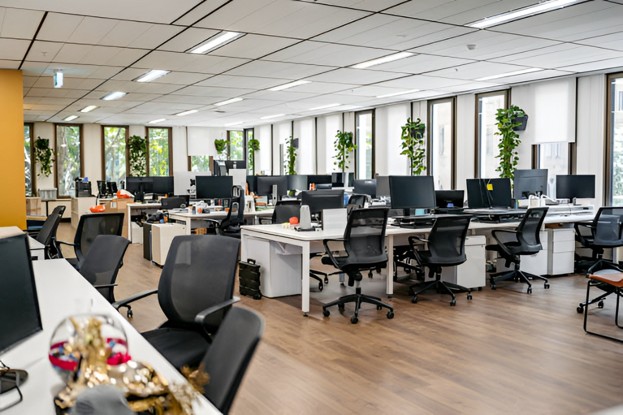
Renting an office is one of the biggest decisions a growing business will make. The right space supports your team, impresses clients and fits your budget without locking you into costly terms. At M1 Business Hub, we help businesses across Logan and the Gold Coast find flexible office solutions. This guide covers your options, the real costs and what to check before you sign.
Table of Contents
ToggleKey Takeaways
- Traditional leases suit established firms needing long term space.
- Serviced offices and coworking offer flexibility with fewer upfront costs.
- Always check outgoings, rent reviews and make good clauses.
- Location affects staff commute, client access and productivity.
- Choose a space that can grow or shrink with your business.
How Australians Are Working Today
The way we use offices has changed. According to the Australian Bureau of Statistics, 36 per cent of employed Australians usually worked from home in August 2025, down from a pandemic peak of 40.5 per cent in 2021. For managers and professionals, the figure was 59 per cent.
Yet the office still matters. Many businesses now want a space for collaboration, client meetings and focused work, rather than a large floor filled every day. This shift has made flexible office options more popular than ever.
Types of Office Rentals in Australia
Before you start inspecting properties, it helps to understand the main choices available.
Traditional Commercial Lease
A standard commercial lease gives you an empty or partly fitted space for a fixed term, often three to five years or longer. You manage the fit out, furniture, internet and utilities. This suits established businesses with stable headcounts and a clear long term plan.
Serviced Offices
A serviced office comes fully furnished and ready to use. Rent usually covers furniture, internet, cleaning, utilities and access to shared facilities like kitchens and meeting rooms. Terms are flexible, often monthly or for six to twelve months.
At M1 Business Hub, serviced offices on the Gold Coast suit teams from one to eight people, with flexible terms at Helensvale, Burleigh Heads and Logan.
Coworking Spaces
Coworking spaces gives you a desk in a shared workspace, either a hot desk or a dedicated desk. It is ideal for freelancers, startups and remote workers who want a professional setting and a sense of community.
Virtual Offices
A virtual office provides a professional business address, mail handling and access to meeting rooms when needed, without a physical desk. It works well for home based businesses that want a credible presence.
The Growth of Flexible Workspaces
Flexible offices have become a solid part of the Australian market. Property Australia, published by the Property Council, reported that flex operators made up 2.7 per cent of office space in major east coast cities in 2023, with Brisbane in a notable growth phase.
Coworking has also spread well beyond city centres. Research from the University of Sydney Business School found that Australia had more than 300 coworking spaces, up from 60 in 2013, with strong growth in coastal areas such as the Gold Coast and Sunshine Coast.
These spaces offer more than desks. A study published in Entrepreneurship and Sustainability Issues, involving the University of Southern Queensland, examined 30 Australian coworking spaces and found they help build community and support entrepreneurship.
Understanding the Real Cost of Renting an Office
The advertised rent is rarely the full cost. Running a business is already expensive. The Council of Small Business Organisations Australia has highlighted that small businesses face rising costs for energy, rent and insurance.
With a traditional lease, budget for:
- Base rent, usually quoted per square metre per year plus GST
- Outgoings such as council rates, building insurance and maintenance
- A bond or bank guarantee, often three to six months of rent
- Fit out costs for desks, partitions, cabling and lighting
- Utilities, internet and cleaning
- Legal fees for reviewing the lease
- Make good costs when you leave
With a serviced office, many of these costs are bundled into one monthly fee. This makes budgeting simpler, especially for small teams.
Key Lease Terms to Check Before You Sign
A commercial lease is a legal commitment, so read it carefully. SmartCompany recommends paying close attention to these terms:
- Lease Term and Options: How long you are committed and whether you can renew.
- Rent Reviews: Whether rent rises by CPI, a fixed percentage or market review.
- Outgoings: Which building costs are passed on to you.
- Permitted Use: Make sure the lease allows your type of business.
- Assignment and Subletting: Your rights if you sell or move.
- Make Good Clause: What you must restore when the lease ends.
Always have a lawyer review a long term lease before signing. It is also wise to compare the total cost against a flexible option.
Choosing the Right Location
Location shapes how easy it is for staff and clients to reach you. A national commute report found Brisbane had the longest average commute of any capital city at 33 kilometres, and that Australians spend over $4,000 each year on commuting.
Long commutes come at a cost. Information Age reported CEDA research showing that hybrid workers save around two hours a week in commuting time. An office closer to where your team lives can help you keep those benefits while still bringing people together.
When comparing locations, consider:
- Access to major roads and public transport
- Parking for staff and visitors
- Nearby cafes, banks and services
- Distance from your clients and suppliers
Why Office Quality Matters
A good office is more than four walls. Natural light, fresh air and a comfortable layout all affect how people feel and work. HR Career News reported on a Green Building Council of Australia report linking office design to staff health and productivity, noting that ill health and absenteeism cost Australian businesses around $7 billion each year.
When you inspect a space, look at lighting, air flow, noise levels, internet speed and access to breakout and meeting areas.
Which Option Suits Your Business?
- Solo Operators and Freelancers: Coworking or a virtual office.
- Startups and Small Teams: Serviced offices with flexible terms.
- Growing Businesses: Serviced offices that allow easy upgrades.
- Large Established Firms: A traditional lease with a custom fit out.
Conclusion
Renting an office is easier when you understand your options, costs and lease terms. Flexible spaces now give Australian businesses a smart way to grow without heavy upfront spending. Whether you need a private office, a coworking desk or a meeting room, we can help. Contact us today to book an inspection at Logan, Helensvale or Burleigh Heads.
FAQs:
How much does it cost to rent an office in Australia?
Costs vary by city, size and type, from affordable coworking desks to larger leased offices with extra outgoings.
What is the difference between a serviced office and a leased office?
A serviced office is furnished with bundled costs and flexible terms, while a leased office needs your own fit out.
How long is a typical commercial office lease?
Traditional commercial leases usually run three to five years, while serviced offices often offer monthly or short terms.
What are outgoings in a commercial lease?
Outgoings are building costs passed to tenants, such as council rates, insurance, cleaning and common area maintenance.
Is a serviced office worth it for a small business?
Yes. It offers lower upfront costs, flexible terms and ready facilities, letting small teams focus on growth.
Do I need a lawyer to review an office lease?
It is strongly recommended. A lawyer can explain your obligations, costs and rights before you commit long term.
